

Background
Today (June 12th, 2023 for those of you in the future), many of the most popular subreddits on the social site Reddit are going dark due to the proposed price hike that is going to be implemented upon the Reddit API. Now, the reasoning behind this seems to be the creation of a new revenue stream for the company. However, it has resulted in massive backlash from the Reddit community and third party application developers. So, let’s explore this rift between the platform and its users and also look at other avenues for monetization of APIs that could have worked out better.
What does monetizing an API mean?
Monetizing an API involves giving access to a part of the backend database upon which a web application is built. A web application, of course, usually consists of a frontend and a backend. The frontend is authorized to pull and manipulate the data from the backend database. Sometimes endpoints of the backend API made to access this data is made public by the company for various reasons. These reasons may include:
Allow 3rd party entities to use it to enhance application experience (as Reddit once did).
Offer a free version of the API for public use (as many government entities do).
Offer a paid or freemium version of the API to generate revenue through sharing user data (as Twitter and many others do now).
Offer API to access resources owned by the company (which is basically what cloud services are).
So, now let’s review some examples of APIs and how they have been monetized by their parent companies:
Case 1: Slack
Slack has a classic free-trial into paid adoption strategy as exhibited on their website:
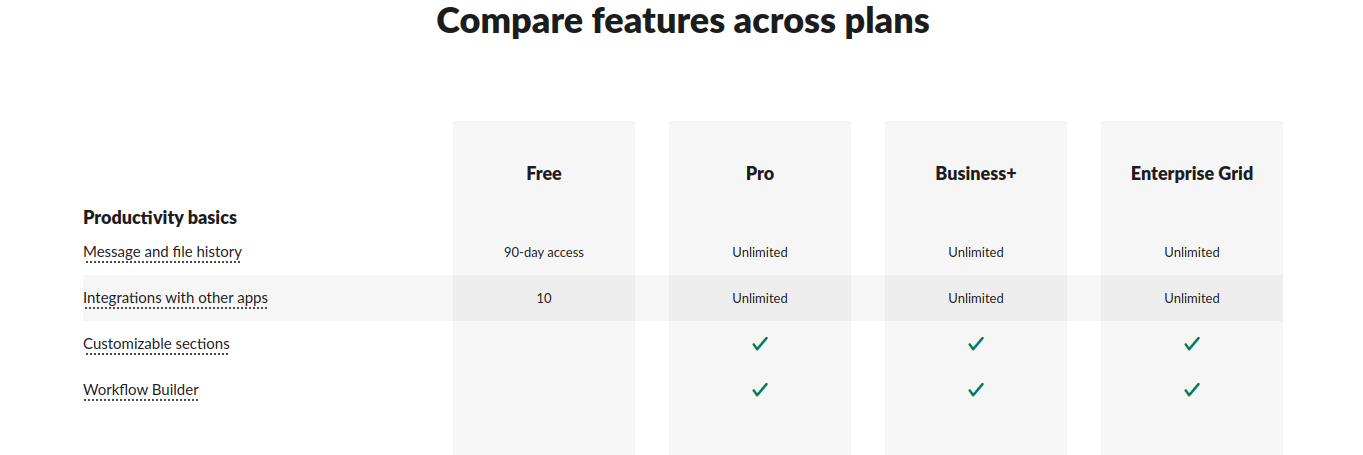
90 days of free trial transitions into a plan where the user can write their own bots and applications. Simple, precise, clear and to the point. Now, Slack is infamous for being a platform that is almost exclusively used for messages despite actually having a voice feature. In this article we will encounter another messaging service that is quite the opposite and compare and contrast.
Case 2: Twitter
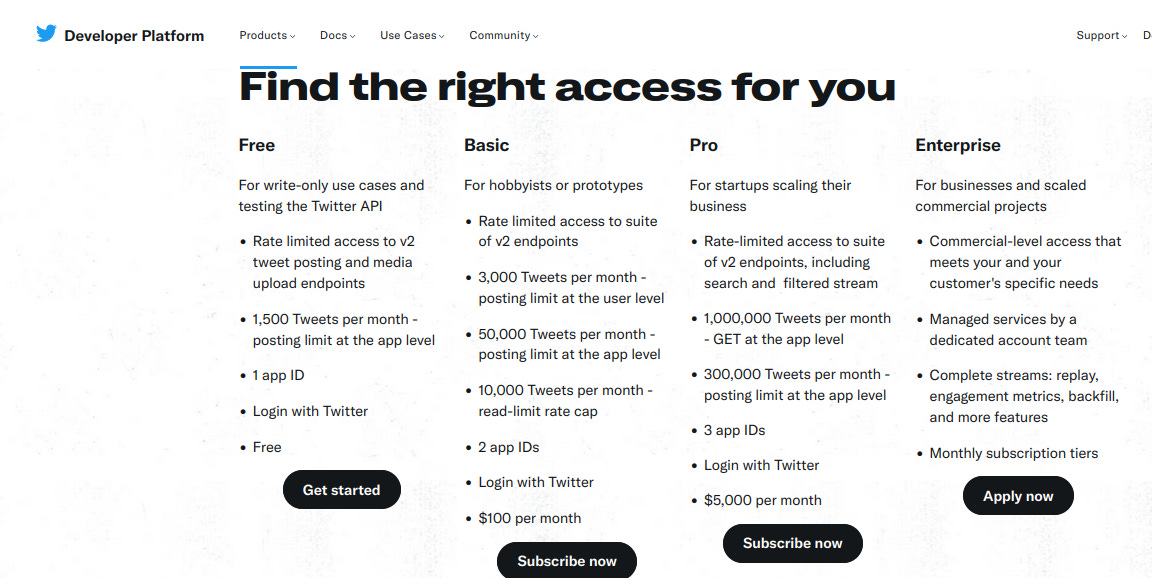
For the longest time, Twitter had a free API which would allow users to access and read people’s tweets and use that feature for all sorts of nifty ideas. People could embed tweets they wanted in their websites which in turn grew Twitter. However, under the Musk regime, Twitter has moved to a fully monetized model with very little actual free tier left (a move Reddit is trying to emulate.
Case 3: NASA
The National Aeronautics and Space Administration is … well, you know what it is, they do space stuff. NASA has a bunch of APIs that do everything from giving exoplanet details to tracking the weather on Mars. NASA has what are called rate limits on it’s APIs. These limits are set to a reasonable rate for hobbyists and smaller applications while being open to increases based on certain criteria. It is one of the most beloved APIs among the open source community due to the diversity of data present and how easy the access is.
Case 4: Cloud Services
It’s probably the most basic way to think about cloud services (Google even calls their individual cloud services APIs), however, it is also the most concise way to think about them as well. Making a VM in the cloud is just calling the API to make that VM in a data center and then acquiring the details to login to that VM. So, in essence because the internet run on these cloud services, it runs on APIs.
Case 5: Reddit
The biggest news today and the news that has brought all of this back up. Reddit in the past had a free API which opened up a world of possibilities within the Reddit community. It helped the platform during it’s nascent years by providing alternative user interfaces for Reddit whose primary criticism was it’s lackluster user interface (particularly on mobile devices). One application in particular known as Apollo became the predominant way in which users on iOS browsed Reddit due it’s incredible iOS native features and design.
However, as the years have gone by and Reddit has seen it’s user base grow, it has become discontent with the amount of revenue that it can extract from those users. Much of the revenue originally came from Reddit awards but that revenue stream is now considered unreliable. So, in desparate need of more sources of revenue it turned - as Twitter had months before it - to it’s API. Reddit decided to charge $0.24 per 1000 API calls, which to independent devs like the developer of Apollo would cost around $20 million a year.
This controversy has had a widespread reach with over 6,000 subreddits going dark on June 12 and 13 of this year. The CEO of Reddit did an AMA in order to discuss this matter in which he said, “We’ll continue to be profit-driven until profits arrive, unlike some of the third party apps, we are not profitable.” An interesting quote. This, in addition to verbal attacks towards the developer of Apollo has resulted in widespread condemnation of Reddit’s behavior by it’s own users.
Conclusion
The conclusion here is that there are a lot of API monetization models that the owners of those APIs follow. How they operate those models is their business but is also the concern of the users that use their applications and the developers that develop them. How will this change in Reddit’s plans affect the way redditors use Reddit? Only time will tell. However, we can say with certainty that this is probably not the last time a popular social media application will try this.